24/7 · 365 Electrical emergency? An engineer is dispatched to you within 30 minutes. 0800 112 5050

Electrical

Electrical
Fault Finding

Some faults announce themselves. Others trip a breaker once a fortnight and behave perfectly while an electrician is standing there.

Published experience

30+years

Coutts Electrical describe their team as having "a combined amount of more than 30 years of experience" — couttselectrical.co.uk/about-us. Combined team experience, not company age: the company incorporated in 2020.

Certified &
accredited

  • NICEIC Approved ContractorRegistered Competent Person Electrical
  • Microgeneration Certification Scheme (MCS)
  • TrustMark
  • Renewable Energy Consumer CodeChartered Trading Standards Institute Approved Code
  • SafeContractor Accreditation
  • SafeContractor SafePQQ Verified
  • Which? Trusted Trader
  • Octopus Trusted Partner
  • The Renewable Energy Hub — approved installer
  • OZEV

Electrical Fault Finding
in Kent.

Fault finding is a testing discipline: isolate, measure, eliminate. We work through the installation methodically rather than replacing parts and hoping.

We use our attention to detail to identify and solve problems that could be perceived by others as too difficult.

Why intermittent faults are worth doing properly

01 Electrical Fault Finding

Why intermittent faults are worth doing properly

An intermittent fault that trips an RCD is usually a real insulation problem somewhere in the installation. It does not fix itself, and resetting the breaker each time is not a solution.

Proper fault finding narrows it to a circuit, then to a section, then to the accessory or cable at fault — and records the readings that prove it.

How a circuit is divided down to the fault

02 Electrical Fault Finding

How a circuit is divided down to the fault

Fault finding starts at the board, because the device that operated has already told us something. An MCB responds to current, so it is reporting a short circuit or an overload. An RCD responds to current leaking to earth, which is a different fault with different tests behind it.

Establishing which of the two is in play before anything is dismantled decides what is worth measuring. The circuit is then opened at a sensible point in the middle — a junction box, an accessory, one leg of a ring. Each half is tested, and whichever half still carries the fault is split again.

Most of that work is done dead. A lighting circuit with a dozen points on it comes down to two or three suspects after a handful of tests, instead of a dozen fittings taken off the ceiling one at a time.

  • 01
    Confirm the symptom and identify which protective device is operating
  • 02
    Isolate the circuit and prove it dead before any testing begins
  • 03
    Take reference readings for the circuit as a whole
  • 04
    Open it at a midpoint and test each half separately
  • 05
    Repeat on whichever half still carries the fault
  • 06
    Reconnect and re-test

03 Electrical Fault Finding

What an insulation resistance test shows

An insulation resistance test applies a test voltage across a dead circuit and measures how much of it escapes — line to neutral, line to earth, neutral to earth. On an ordinary 230 V circuit the test is normally carried out at 500 V.

The readings that matter are the marginal ones. A circuit sitting at a couple of megohms is already on its way down, and the reasons are usually physical: damp in an outside junction box, a nail through a cable, a heating element breaking down, insulation cracked at a lampholder.

Comparing it against the other circuits in the same board often singles it out. Not every fault sits on one circuit, though. An oven element, a washing machine, an outdoor supply and a run of LED drivers can each let a small amount away to earth.

Put enough of those behind the same protective device and it operates, with no single circuit obviously at fault. Measuring the standing leakage and then removing loads one at a time separates a real insulation fault from a device simply carrying too much.

When the fault will not show itself

04 Electrical Fault Finding

When the fault will not show itself

A fault that is present can be measured. A fault that comes and goes has to be caught, provoked, or inferred from what it leaves behind, and that is what makes intermittent work different from the rest of an electrician's day.

Intermittent faults usually have a physical pattern behind them. Water finds its way into an outdoor accessory when it rains. An element pulls more current as it fails. A loose terminal expands as it warms and makes contact again as it cools. A cable shifts when a door swings or a floor is walked on.

Where the fault refuses to appear at all, testing moves onto what can be measured regardless — the condition of terminations, continuity of protective conductors, readings compared circuit against circuit. A circuit can also be left divided, so the next occurrence is already confined to one half of it.

Knowing when it happened and what was running at the time turns a random fault into a short list of circuits worth testing. Anything you can write down beforehand is worth more than it sounds.

  • 01
    The date and rough time of each trip or power loss
  • 02
    What was switched on or in use at that moment
  • 03
    Whether it was wet, cold, or unusually warm
  • 04
    Which sockets, lights or appliances lost power, and which kept working
  • 05
    Which device at the board had operated, and whether it reset first time
  • 06
    Anything that changed recently: a new appliance, decorating, a floor lifted, digging in the garden

05 Electrical Fault Finding

The difference between a symptom and a cause

The thing that stopped working is frequently not the thing that failed. A dead socket at the end of a run can be in perfect order, the real fault a loose terminal two sockets back where a conductor has been heating and cooling for years.

Replace the dead socket and nothing changes except which accessory the problem surfaces on next time. A light fitting that keeps taking out lamps is the same story — lamps are cheap and quick to change, so several go in before anyone measures what is arriving at the fitting.

So a fault is not found when the symptom stops. It is found when a measurement that was wrong reads right and re-testing proves it. That is a harder standard than watching to see whether the trouble comes back.

06 On site

This work,
photographed.

Coutts Electrical's own photographs of their own completed installations.

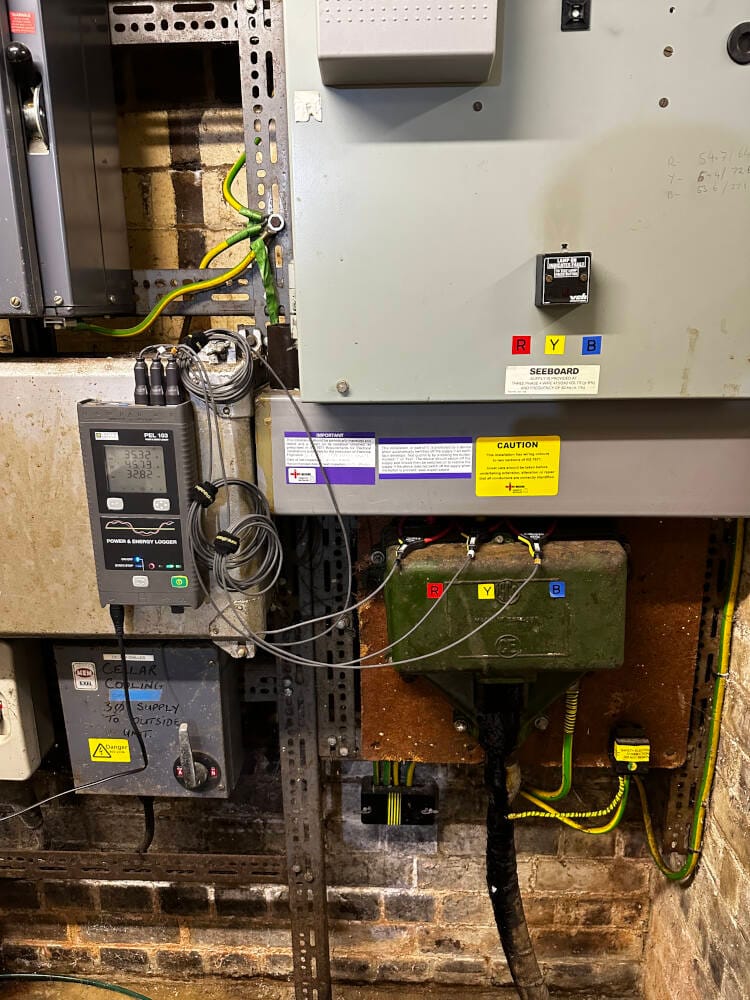
Commercial electrical installation by Coutts Electrical Contractors — photograph 7 of 25
Residential rewire
Commercial electrical installation by Coutts Electrical Contractors — photograph 8 of 25
Commercial installation
Commercial electrical installation by Coutts Electrical Contractors — photograph 9 of 25
Commercial installation
Commercial electrical installation by Coutts Electrical Contractors — photograph 10 of 25
Commercial installation
Commercial electrical installation by Coutts Electrical Contractors — photograph 11 of 25
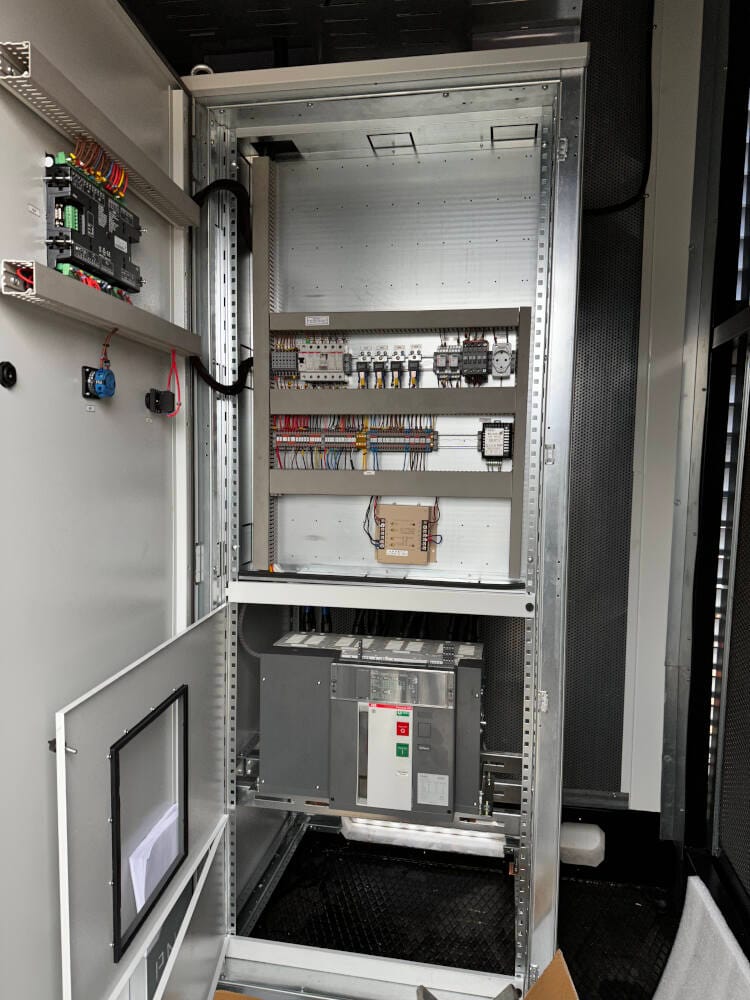
Commercial back-up generator installation
Commercial electrical installation by Coutts Electrical Contractors — photograph 12 of 25
Commercial installation
Commercial electrical installation by Coutts Electrical Contractors — photograph 13 of 25
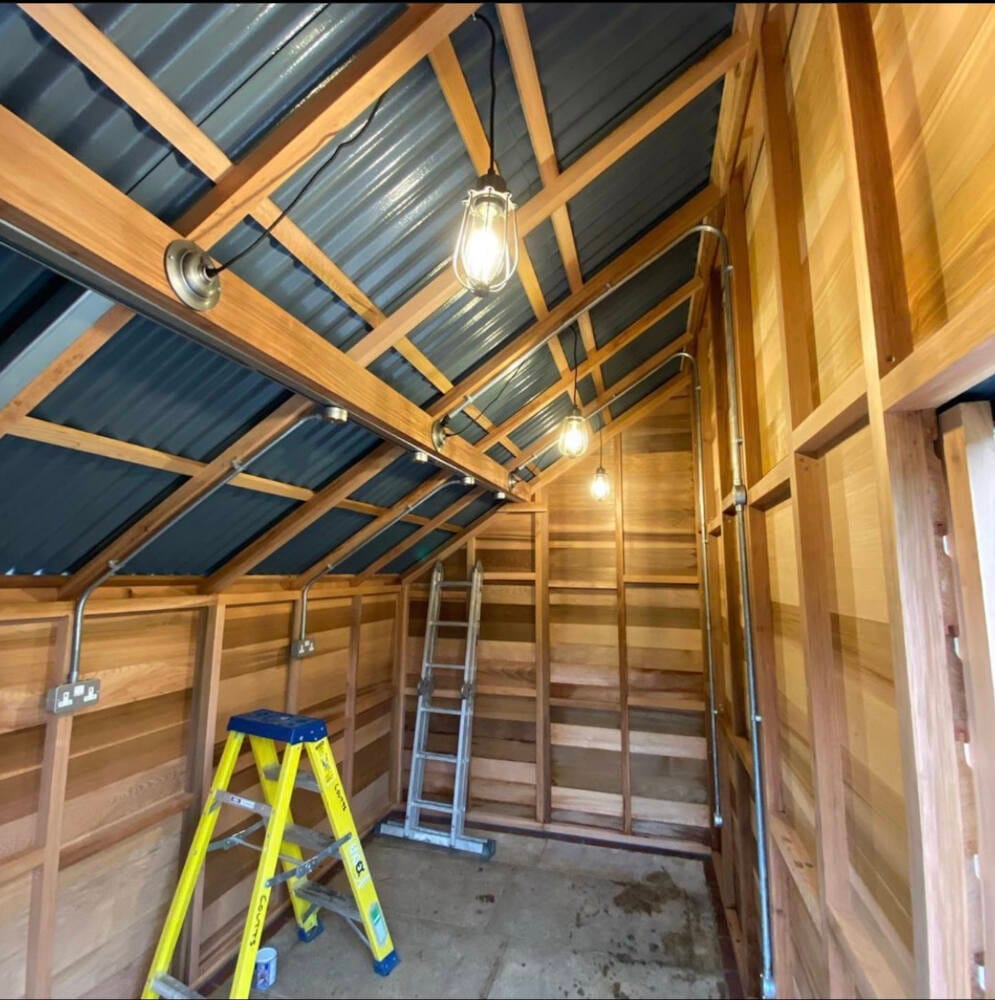
Workshop installation
Commercial electrical installation by Coutts Electrical Contractors — photograph 14 of 25
Commercial installation
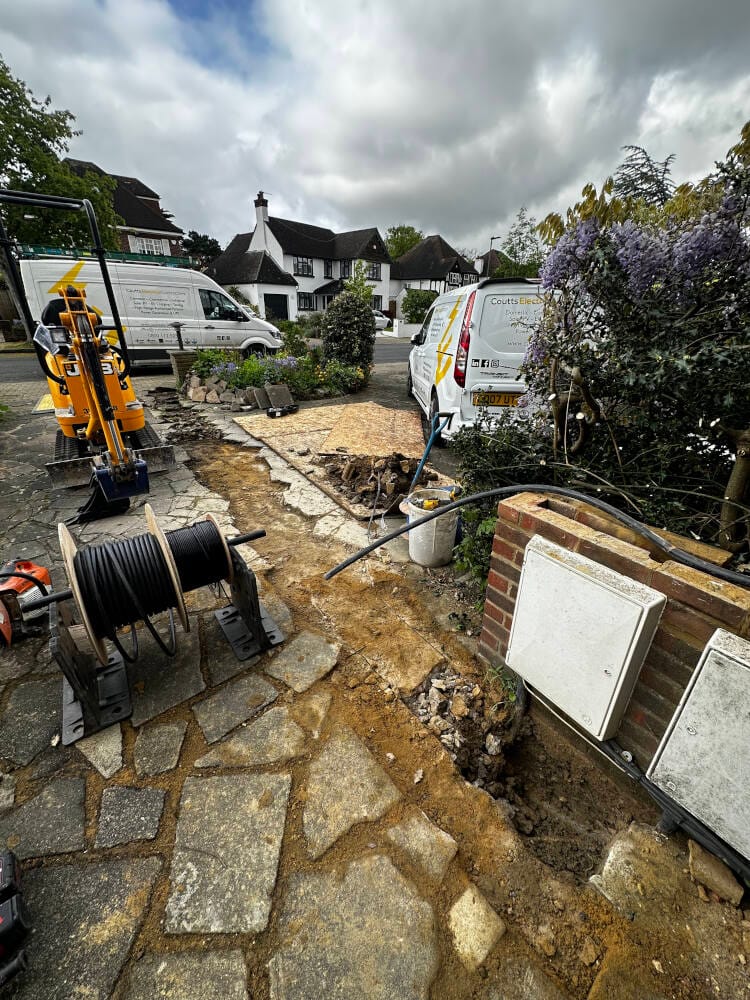
Commercial electrical installation by Coutts Electrical Contractors — photograph 15 of 25
Residential 3 phase upgrade
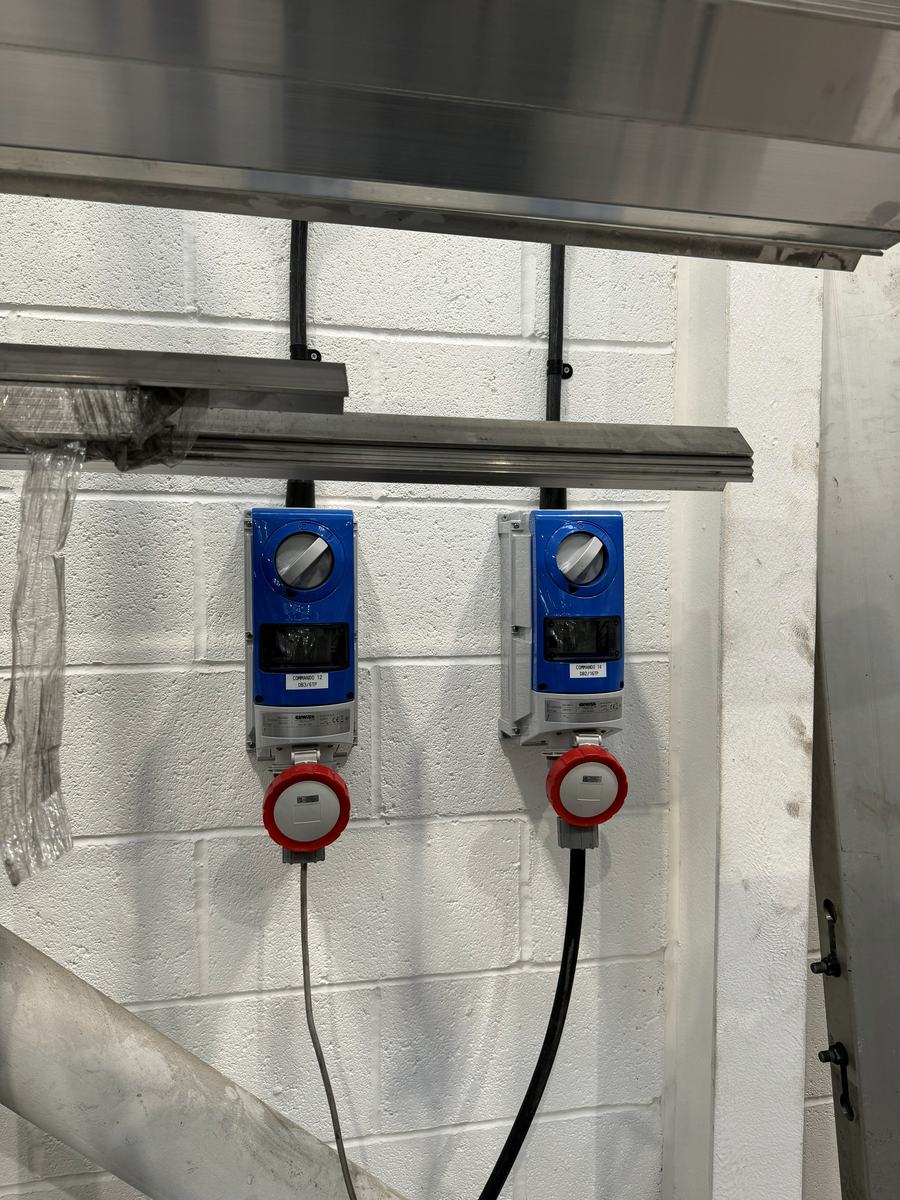
Three-phase and single-phase commando sockets installed on a workshop wall by Coutts Electrical Contractors — photograph 16 of 25
Commercial installation
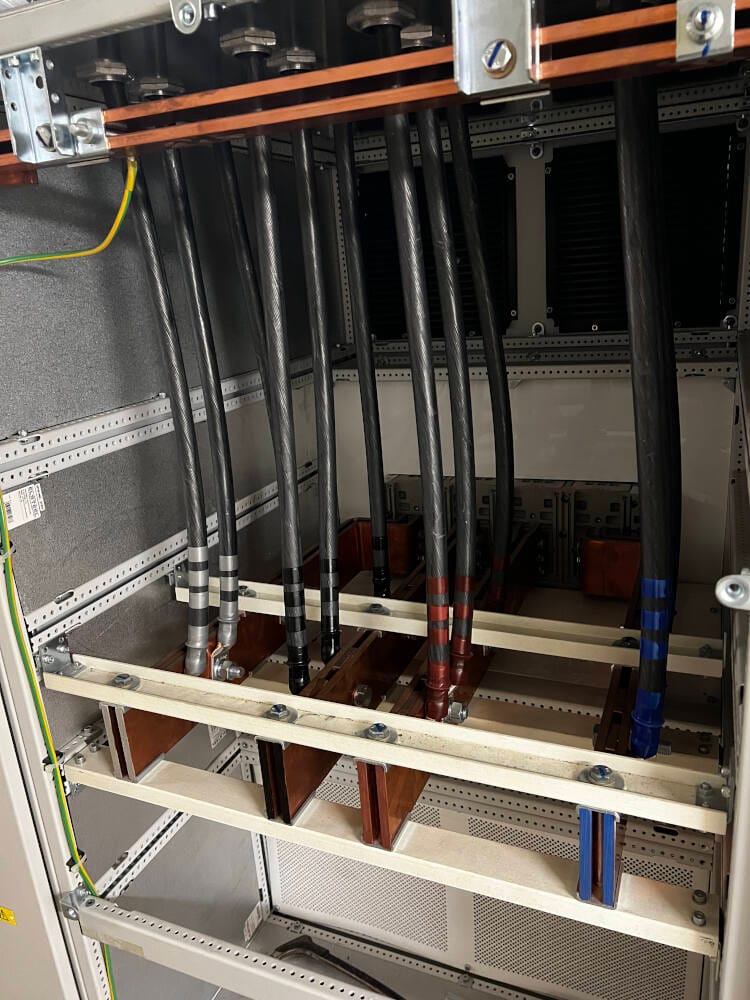
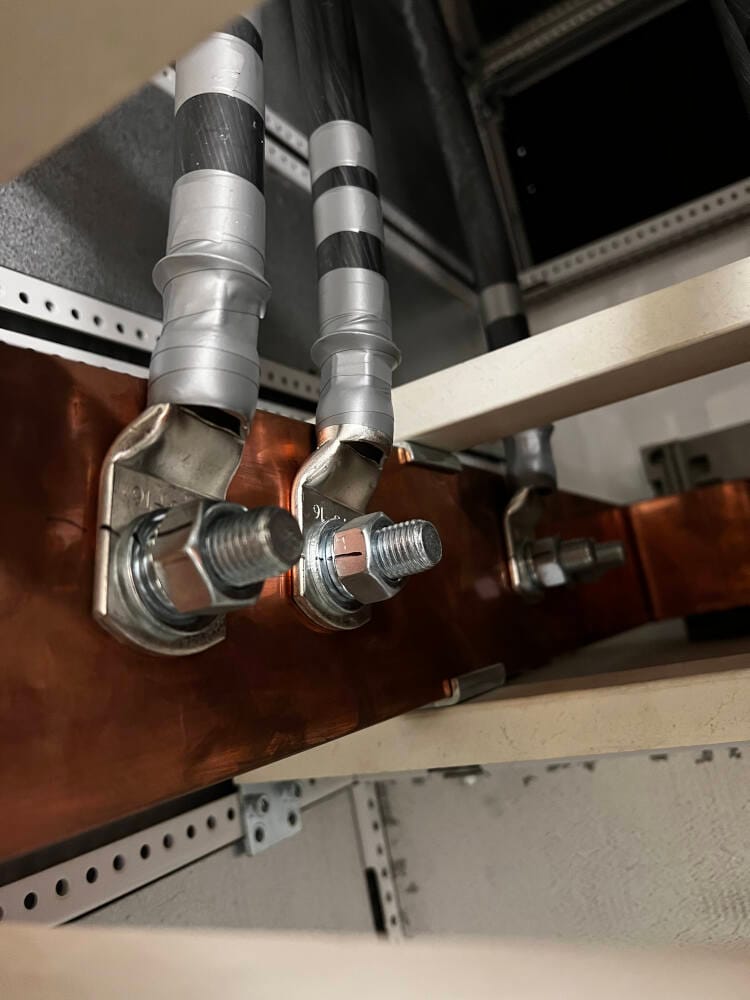
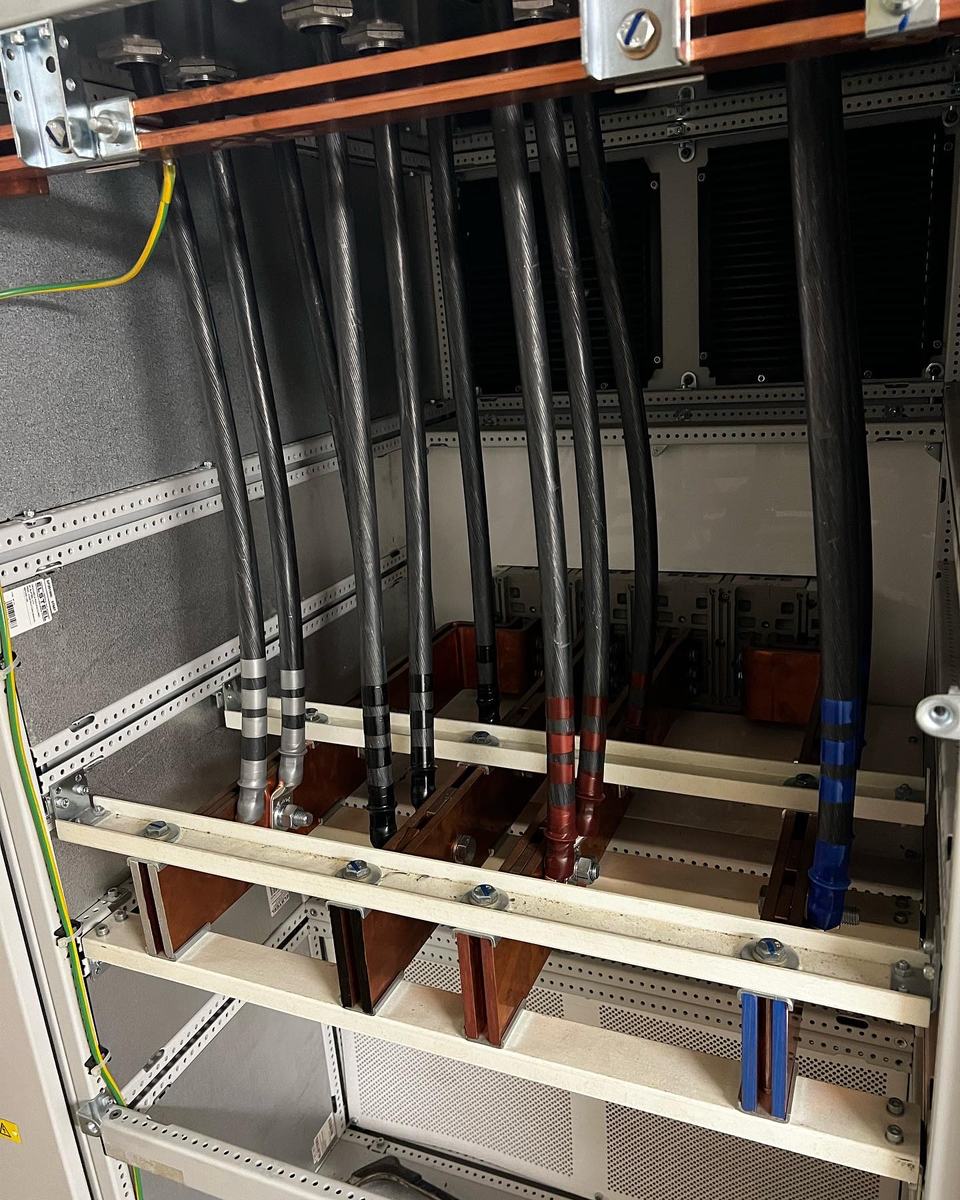
Copper busbars and armoured tails terminated inside a commercial distribution panel by Coutts Electrical Contractors — photograph 17 of 25
Commercial installation
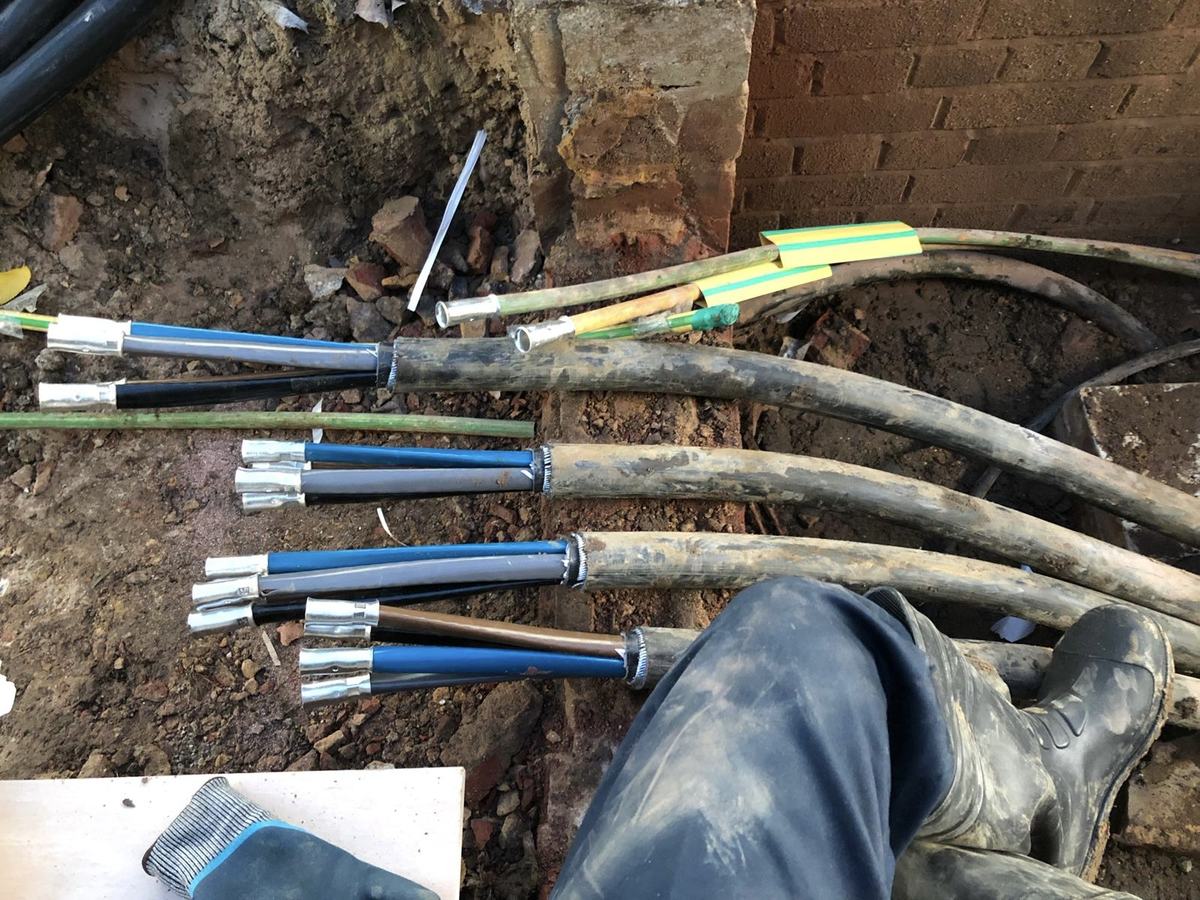
Armoured cable tails glanded and terminated in an excavated trench against a brick wall — photograph 18 of 25
Commercial installation
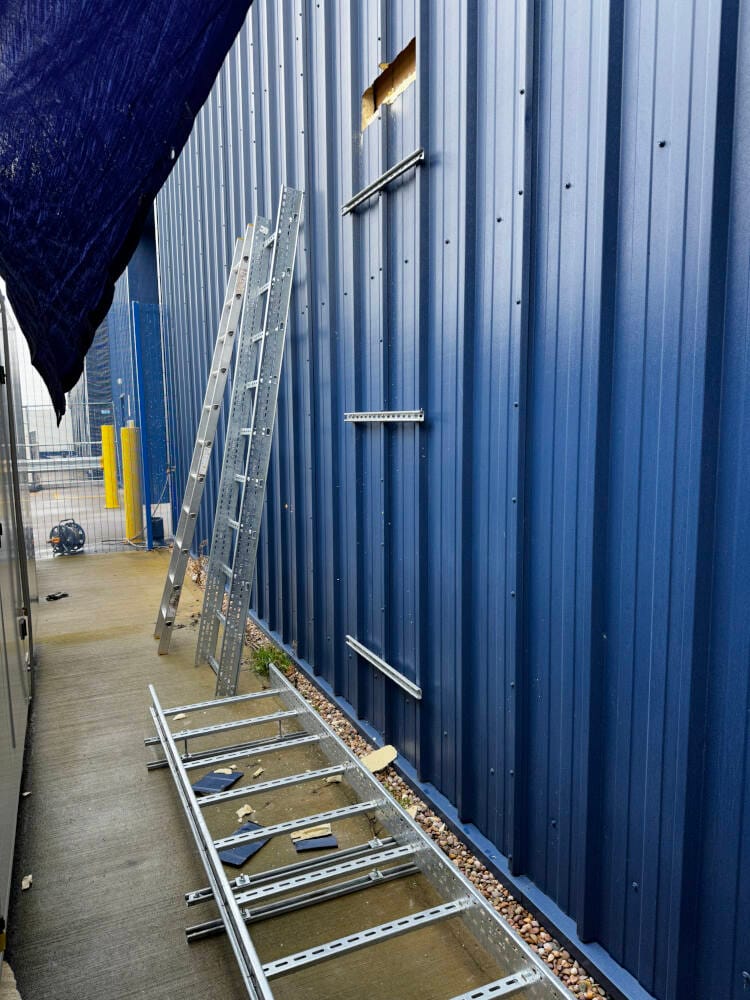
Cable ladder sections and cable drums set out on the floor of an industrial unit before first fix — photograph 19 of 25
Commercial installation
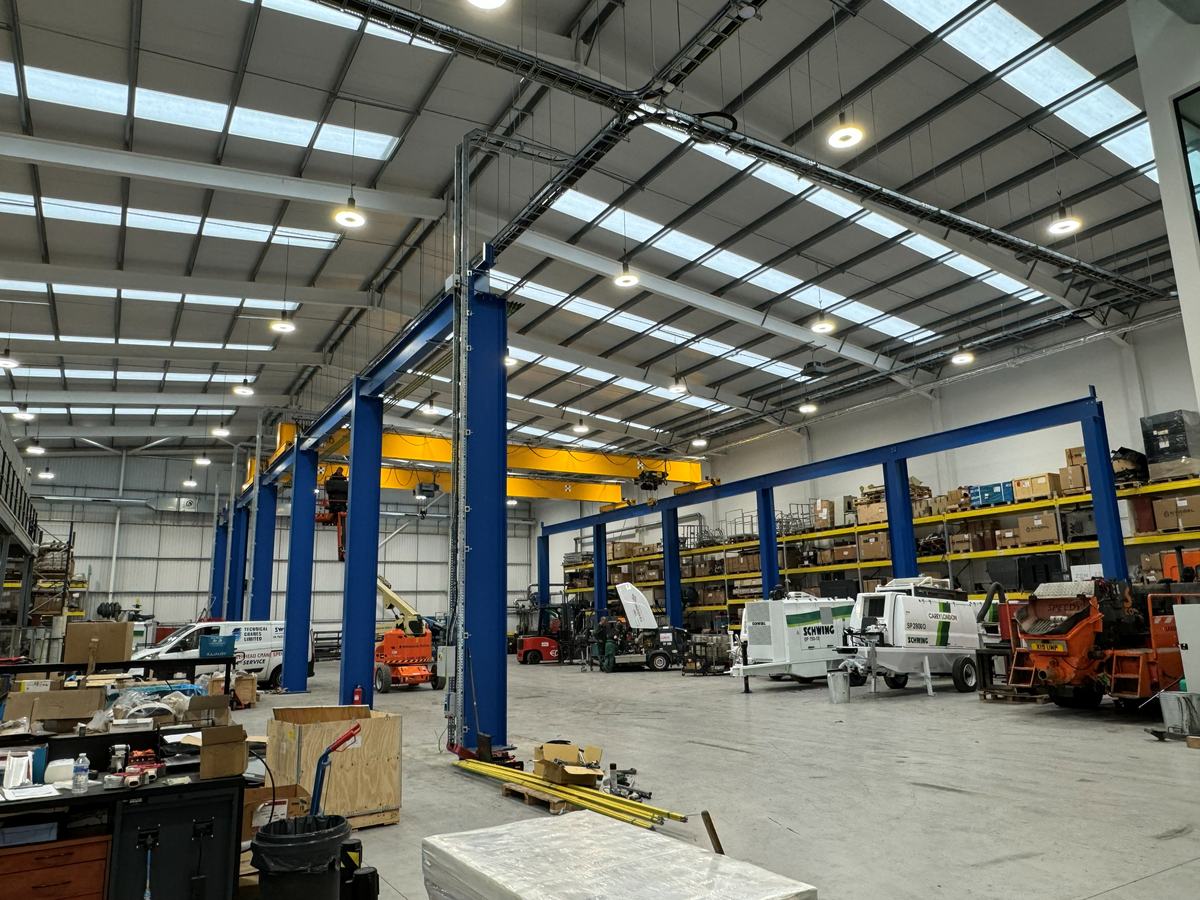
High-bay lighting and power distribution installed through an industrial workshop with an overhead gantry crane — photograph 20 of 25
Commercial installation

Photographs are Coutts Electrical's own, of their own completed work. Captions name the system type rather than a location, because the images are not tied to a named customer or town.

07 What customers said

Verbatim,
not curated.

Real reviews from the Google profile Coutts Electrical publish on their own site, reproduced word for word.

I had a bank holiday DIY emergency and needed someone to come out and make it safe and get our power back on. Coutts answered and Max was round within a couple of hours. Really easy communication, no hassle and easy to deal with, will definitely be using them for future jobs.

George Mills
April 8, 2026 · Google

Very efficient service from Max and Alex. They made completing an Electrical Condition Report and then repairs where required in or office seamless and not intrusive at all. Really great for peace of mind. Thank you

Jennifer Neal
January 17, 2025 · Google

Great service and price, Max follows up with paperwork and emails. So pleasant to find a proactive supplier

Lynne Gane
June 21, 2026 · Google

Very happy with electrical work undertaken by Max of Coutts Electrical, and his team. They installed an electric radiator and new light in the kitchen. They offered advice and were professional and tidy. Would highly recommend.

Alison Milligan
January 17, 2026 · Google

A fast, efficient, effective, reliable and highly professional company, most recommended.

GL M
October 13, 2024 · Google

Excellent and fast work, highly recommended!

Pat Wintersgill
May 20, 2023 · Google

Max and his team did a splendid job for usThey took great care to ensure that the right solutions were found and implemented. They completed the tasks on time, dealing with unexpected issues as they arose.Max and the team were friendly, polite, punctual and helpful.Everything was left neat and tidy.As we were unable to use our home until the work was completed we were also grateful that everything was done so quickly

james barton
March 1, 2023 · Google

Max responded very quickly to my request to review an electrical fault and efficiently dealt with the issue. I’m delighted that I’ve found Max and will definitely be calling upon him for any future electrical work.


Julie Bowen
September 18, 2025 · Google

8 of the reviews published on the Coutts Electrical reviews page, each one reproduced word for word.

08 Questions

Asked
most often.

How do I know if I need electrical maintenance for my home or business?

Identifying the need for electrical maintenance in your home or business involves paying attention to signs and conducting periodic checks: Do you face frequent electrical issues – blown fuses, tripped circuit breakers, flickering lights, regular power outages? If your property has old wiring, it may be time for an upgrade. Do you get unusual odours or see sparks when using electrical outlets or switches? Have you experienced mild shocks when using appliances or switches of late? Sudden spikes in energy bills can also be a signal that you need electrical maintenance immediately. Our team will help you with inspections, repair, maintenance, and other crucial electrical services.

Why does finding the fault take longer than fixing it?

Because the repair is usually the last part of it. Dividing a circuit down means isolating it, opening it at each test point, taking readings, putting it back together and moving on, and most of the accessories that have to come off the wall to do that turn out not to be the ones at fault. Once the cause is identified the physical work is often small: a terminal remade, a length of cable replaced, an accessory changed.

Do I need fault finding or an EICR?

They answer different questions. Fault finding is aimed at one symptom you already have, such as a circuit that trips or a socket with no power. An EICR is a scheduled inspection of the whole installation that reports on its overall condition. The two meet in the middle: if an EICR records a coded defect, tracing what is actually causing it is fault finding.

Can you tell me what is wrong over the phone?

Not with any certainty, and it would be guesswork to try. What a description does give us is the shape of the problem: whether it looks like leakage or overcurrent, whether it is one circuit or the whole board, whether anything about the property has changed recently. That decides what we bring and where we begin testing. The diagnosis itself is made on site with instruments.

10 Start here

Get a
free quote.

Tell us your postcode and roughly what you are after. We come out, survey it properly, and put a written price in front of you — with the VAT position confirmed on it.

We need a name to put on the quotation.

A number lets us book the survey in one call.

Please enter a valid email address.

The postcode tells us whether you are in our area.

What can we help with?

Pick the closest one — "Not sure yet" is fine.

Please fill this in.

Or call 0800 112 5050 — 24/7, 365 days a year.
Free quotation No obligation Written quotation MCS certified
Thanks — that is with Coutts Electrical now. The office will be in touch using the details you gave.

Not ready yet? All services · reviews · the job gallery.

Call 0800 112 5050 Free quote