Solar 8 min read
Do you need planning permission for solar panels in Kent and Bromley?
Most home solar in Kent and Bromley is permitted development. The limits, the conservation area, listed building and flat exceptions, and what to check.

Quick answer: For most houses in Kent and the London Borough of Bromley, you don’t need to apply for planning permission to put solar panels on the roof. They count as permitted development under Schedule 2, Part 14 of the General Permitted Development Order 2015, as long as they stay within its size limits. The main exceptions are a listed house, an Article 4 direction that removes the right, panels on a wall, balcony or roof enclosure fronting a highway in a conservation area, and a flat roof on protected land, where you must ask the council for prior approval first. The rules for houses last changed on 27 August 2026. Building regulations and the network operator apply either way.
How permitted development works for solar
Permitted development is planning permission granted nationally by the General Permitted Development Order (GPDO), so there’s nothing to apply for. In Part 14 of Schedule 2, Class A covers panels on a house, a block of flats or a building in its grounds such as a garage. Class B covers stand-alone panels in the garden.
Panels must, “so far as practicable”, be sited to minimise their effect on the building’s external appearance and on the amenity of the area, and be removed once no longer needed.
Flat roofs were added on 21 December 2023 (SI 2023/1279). On 27 August 2026, SI 2026/896 split the limits for houses and blocks of flats, changed the rules for walls, balconies and garden arrays, and named plug-in solar expressly in the definition of solar PV. A project permitted under the old rules but not the new ones can go ahead until the end of 26 August 2027.
The checks at a glance
| Check | Who decides | When it applies | Source |
|---|---|---|---|
| Planning permission | Your council | Outside the permitted development limits, a listed house, or an Article 4 direction | GPDO 2015, Sch. 2 Pt 14; article 4 |
| Prior approval | Your council (56 days) | A flat roof on protected land, and some garden arrays | GPDO 2015, Sch. 2 Pt 14, paras A.2(ba), B.2(aa), J.4(9) |
| Listed building consent | Your council | Works that would affect a listed building's character | Listed Buildings Act 1990, s.7 |
| Building regulations | Building control, or a competent person scheme installer | Normally for roof-mounted panels and the electrics | Planning Portal; GOV.UK |
| Network operator | UK Power Networks here | Every grid-connected system (G98 or G99) | EREC G98 and G99 (ENA) |
The limits for panels on a house
The Class A limits for a house, as in force on 15 October 2026. Break any of them and you need planning permission.
| Where the panels go | Limit | GPDO 2015, Sch. 2 Pt 14 |
|---|---|---|
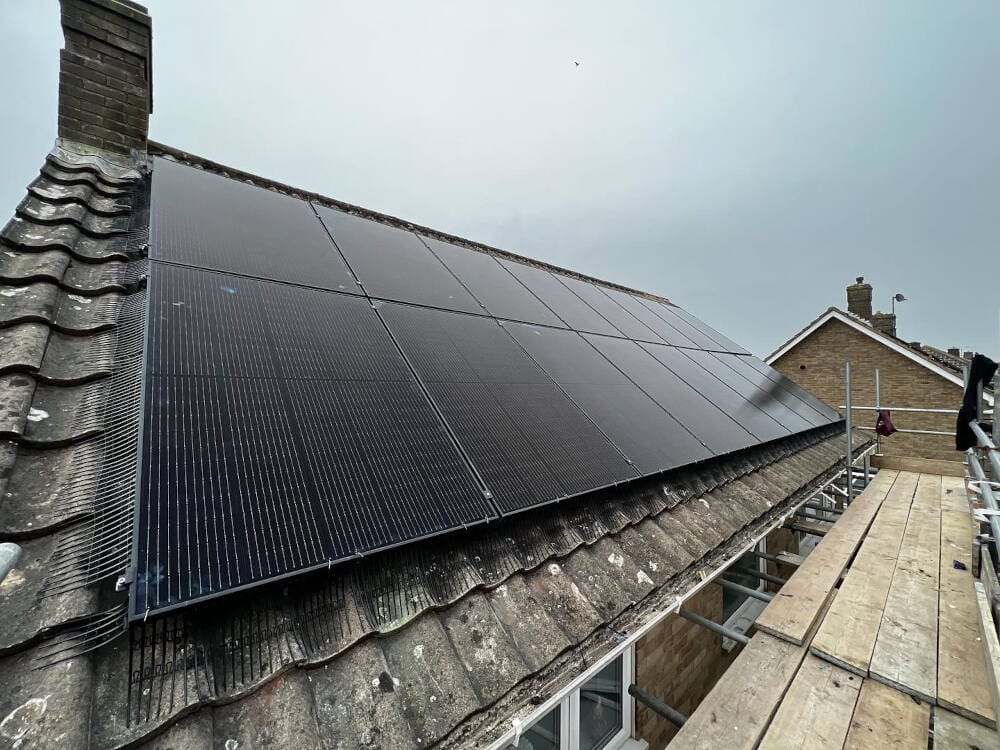
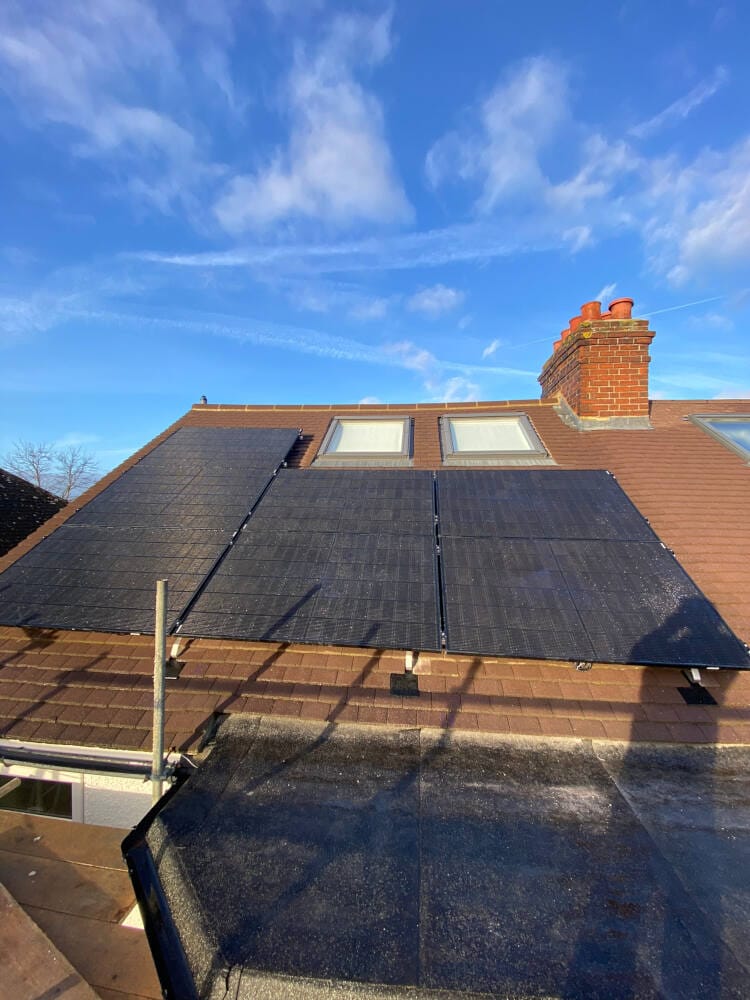
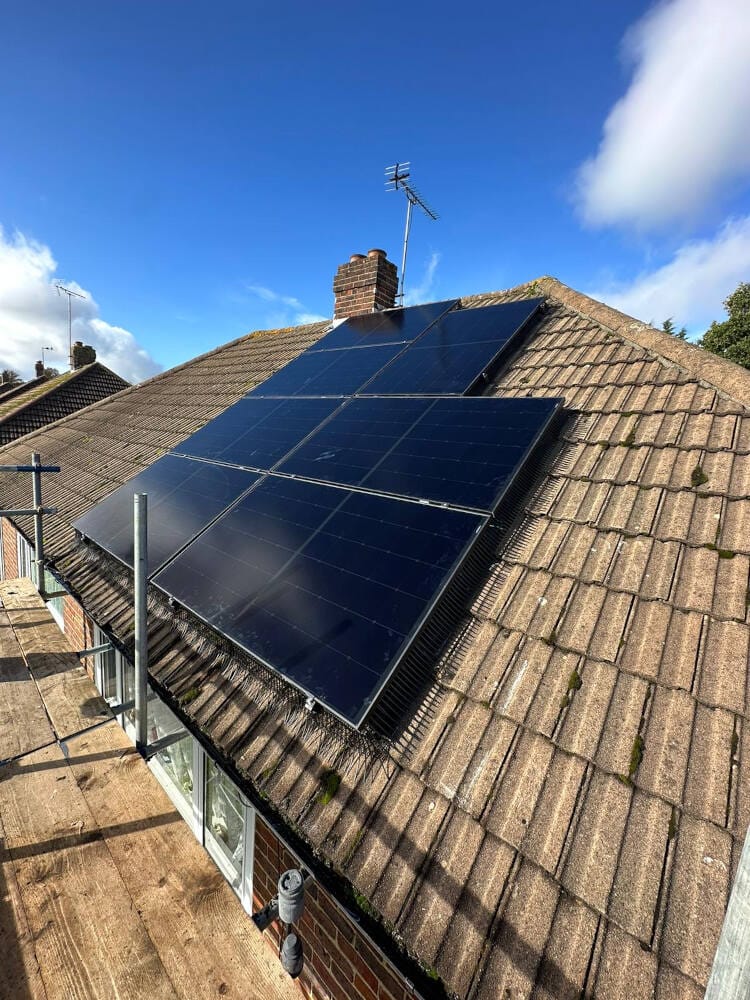
| Pitched roof | No more than 0.2 m out from the slope, and no higher than the highest part of the roof (chimneys excluded) | para. A.1(2)(c) |
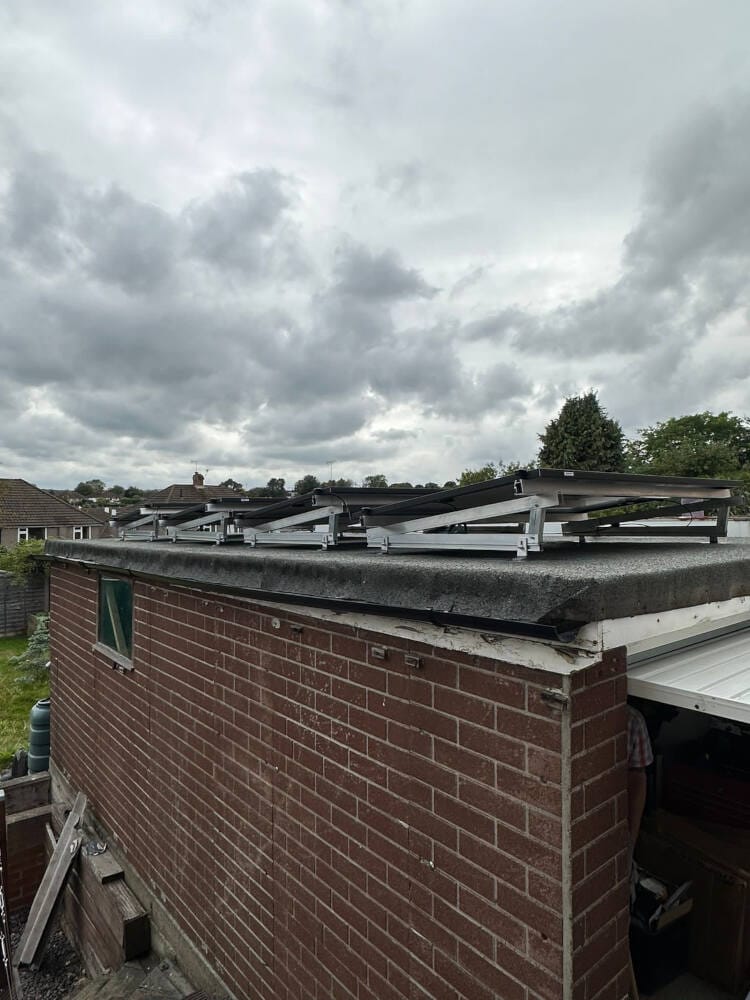
| Flat roof | No more than 0.6 m above the highest part of the roof (chimneys excluded); prior approval first on article 2(3) land | paras. A.1(2)(d), A.2(ba) |
| Wall | No more than 0.2 m out where the wall abuts a highway, 0.4 m elsewhere | para. A.1(2)(a) |
| Balcony or roof enclosure | The same 0.2 m and 0.4 m limits | para. A.1(2)(b) |
| Conservation area or World Heritage Site | Not on a wall, balcony or roof enclosure that fronts a highway | para. A.1(2)(e) |
| Listed building | Not on a listed house, or a building within its curtilage | para. A.1(2)(g) |
| Plug-in solar | Not on a wooden wall, balcony or enclosure, or timber cladding | para. A.1(2)(h) |
“Article 2(3) land” is the GPDO’s protected land, including conservation areas, areas of outstanding natural beauty and National Parks. Prior approval asks the council whether it needs to approve how the panels look. Work can start once it says approval isn’t needed, gives it, or 56 days pass without a decision.
Flats and leaseholders
Part 14 defines a block of flats as “a building which consists wholly of flats”, so a house converted into flats counts. Blocks have their own list: no more than 0.2 m out from a wall or pitched roof slope, nothing above a pitched roof’s highest part, 0.6 m on a flat roof, nothing on a wall fronting a highway in a conservation area, and nothing on a listed block.
The Planning Portal notes that leaseholders may need permission from their landlord, freeholder or management company, so read your lease before you ask for quotes. If your flat is above a shop or office, the building isn’t wholly flats, and the GPDO’s definition of a dwellinghouse excludes a building containing flats. The house and flat rules may not apply, so ask the council.
Conservation areas in Bromley and Sevenoaks District
A conservation area doesn’t stop panels on a house’s pitched roof, even on a slope facing the road, if they stay within the limits above. What changes is that walls, balconies and roof enclosures fronting a highway are excluded, a flat roof needs prior approval, and garden panels nearer the road than the house face tighter limits (see below).
Panels are already common in both council areas: DESNZ counted 4,093 solar PV sites in the London Borough of Bromley at the end of 2025, and 3,282 in Sevenoaks District.
London Borough of Bromley. The council says the borough has 47 conservation areas. The list in its Local Plan includes one named simply “Chislehurst”, along with “Bickley Park”, “Mavelstone Road, Bickley”, and “The Chenies”, “Station Square” and “Chislehurst Road” in Petts Wood. Its interactive map shows whether your property is listed, locally listed or inside a conservation area.
In Chislehurst, only that map shows whether your address is inside the conservation area named after the town. Our Chislehurst area page has the local network and solar figures for BR7.
Sevenoaks District. The council lists 41 designated conservation areas, from town centres such as Sevenoaks and Westerham to villages and hamlets. Its draft Plan 2040 also says more than 60% of the district lies within the Kent Downs or High Weald areas of outstanding natural beauty. That’s article 2(3) land too, so the flat-roof prior approval step applies there even outside a conservation area. In Sevenoaks and the villages around it, check both.
Tonbridge, Maidstone and elsewhere in Kent. Check your address the same way with your own council, such as Tonbridge and Malling or Maidstone: conservation area, listing and any Article 4 direction.
Article 4 directions
Article 4 of the GPDO lets a council switch off a permitted development right in an area. A direction removes only the rights it names, so check whether it names Part 14 (or Part 40, in a direction made before April 2015).
Bromley publishes its directions on one page. About a third of the titles name a Part and Class, and none names Part 14. Most, such as Kemnal Road, Chislehurst, name no class, so open the PDF for your area. The Chislehurst Road Conservation Area direction, in effect since 19 July 2022, removes Part 1, Class C (other alterations to a house roof). Solar panels aren’t part of Class C, so that direction doesn’t affect the Part 14 solar right. For certainty in writing, Bromley offers a lawful development certificate for proposed work, which it says isn’t compulsory.
If your house is listed
Class A doesn’t apply to a listed house or a building within its curtilage, and Class B doesn’t cover garden panels within a listed building’s curtilage. You would need planning permission.
Separately, section 7 of the Planning (Listed Buildings and Conservation Areas) Act 1990 forbids altering a listed building “in any manner which would affect its character” without listed building consent, and section 9 makes a breach an offence. That isn’t limited to the outside, so ask about cable routes and the battery position too.
Local listing is different: the GPDO’s exclusion uses the statutory list under section 1 of the 1990 Act, not a council’s local list.
Panels in the garden
For a house, Class B garden panels have height limits, measured from the ground, and the lowest one that applies counts:
- 1 m within 5 m of the boundary and in front of the house’s principal elevation
- 2 m anywhere else within 5 m of the boundary
- 2 m in a conservation area, nearer the road than the house
- 4 m in any other case.
The panels’ surface area can’t exceed 9 square metres, and nothing can go within a listed building’s curtilage. Prior approval is needed in a conservation area nearer the road than the house, or on article 2(3) land within 5 m of the boundary. Blocks of flats are limited to one array, at least 5 m from the boundary.
Batteries
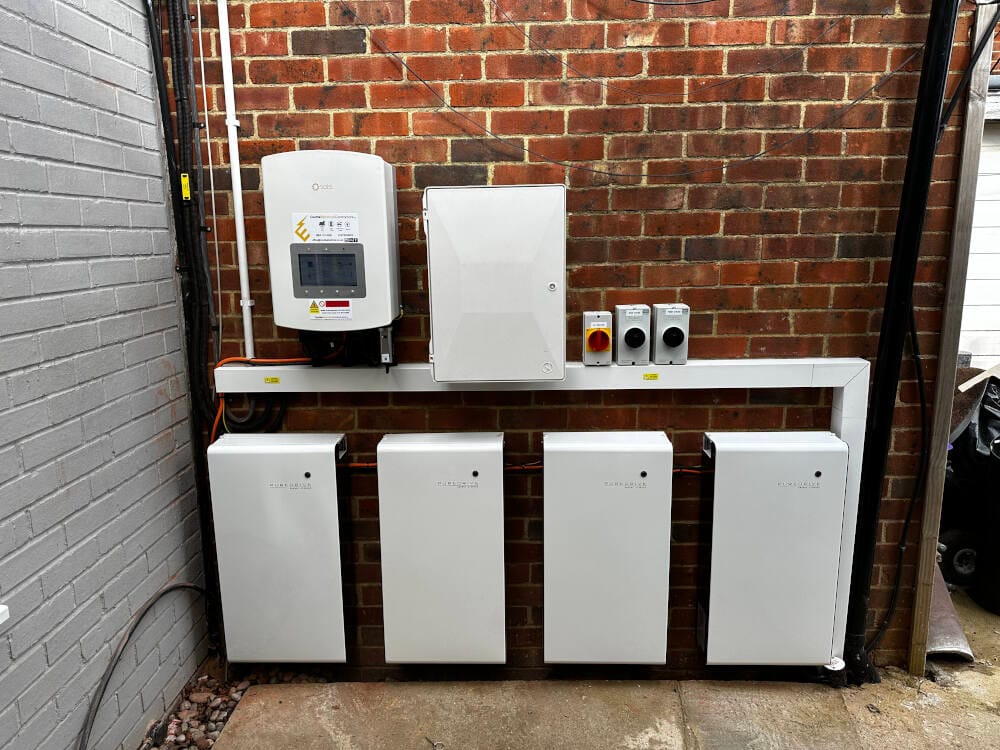
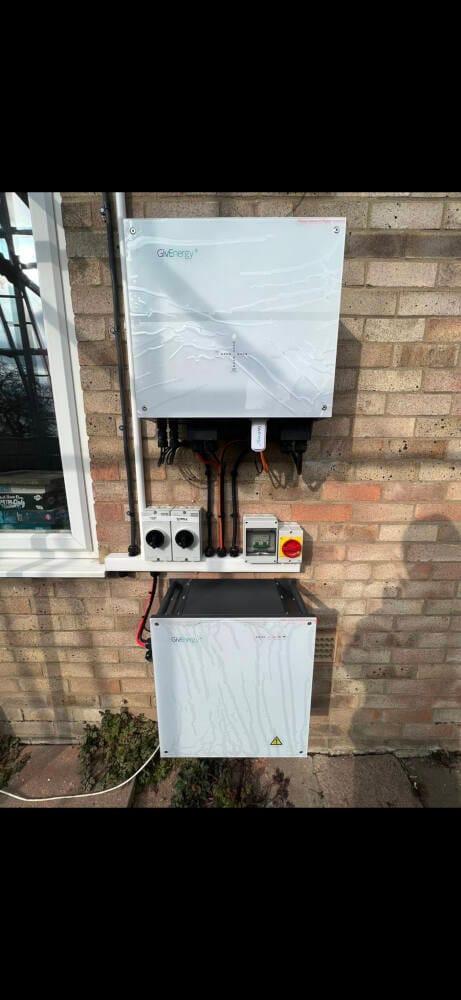
A battery fitted inside your house doesn’t normally need planning permission. Under section 55(2)(a) of the Town and Country Planning Act 1990, works that affect only a building’s interior, or don’t materially affect its external appearance, aren’t “development”. A battery mounted outside, or a new enclosure for one, may change how the house looks, so check first. Every guide-priced system Coutts Electrical publishes includes 10 kWh of battery storage.
Building regulations
GOV.UK says building regulations approval is different from planning permission, and you might need both. The Planning Portal says building regulations will normally apply to roof-mounted panels: the roof’s ability to carry the weight has to be checked, and the electrics are covered too. GOV.UK says you don’t need to get approval yourself if you use someone registered with a competent person scheme, but only for the work the scheme covers. Ask whether that includes the roof’s structure as well as the electrics.
Coutts Electrical is an NICEIC Approved Contractor. Its TrustMark register entry (licence 2677315) lists NICEIC as its scheme provider, and its licensed trades as electricians and solar panel installers (PV) under MCS. Every completed system it installs includes MCS certification, the DNO G98 notification or G99 application, and a Part P certificate.
Telling the network operator: G98 or G99
Under G98, if all your generating units combined total 16 A per phase or less, about 3.68 kW on a single-phase supply, you don’t need to contact the distribution network operator (DNO) in advance. Your installer informs it within 28 days of commissioning. Above that, G99 applies and the DNO is consulted before installation. The Energy Networks Association’s guide adds that electricity storage counts towards the total.
UK Power Networks runs the network here under two licences. Based on the Elexon grid supply point group for a postcode in each town, Chislehurst, Bickley, Beckenham and Sydenham are in London Power Networks, and Sevenoaks, Westerham, Orpington, West Wickham, Tonbridge and Maidstone are in South Eastern Power Networks. Petts Wood sits on the boundary: the lookup returns both licence areas for a BR5 postcode, so your installer confirms which applies from your supply.
Before you book a survey
- Check the council map for listing and conservation area status.
- Check for an Article 4 direction, and which classes it names.
- Note where the panels would go: roof, wall, balcony or garden.
- Leaseholders: check your lease.
Then see what solar panels and a battery cost in Kent, and solar panel grants in Kent for VAT relief and schemes. For whether the numbers work on your roof, read is solar worth it in Kent. If you’ve had a group-buying letter, see our guide to Solar Together in Kent. To arrange a survey and written quotation for solar panel installation, get in touch or call 0800 112 5050.
Questions people ask
Do I need planning permission for solar panels on the front of my house?
Not usually. A roof slope facing the road isn’t excluded, even in a conservation area, if the panels stay within the pitched roof limits. A listed house or an Article 4 direction changes that.
Can I put solar panels on a flat roof in a conservation area?
Yes, within the 0.6 m limit, but first apply to the council for a prior approval decision. Work can start once it decides, or after 56 days without a decision.
Does a plug-in or balcony solar kit need planning permission?
Not within the Class A limits, which have named plug-in solar expressly since 27 August 2026. On a house balcony: 0.2 m out where it abuts a highway, 0.4 m elsewhere, nothing on wood or timber cladding, and no balcony fronting a highway in a conservation area. A block of flats has no separate balcony allowance (0.2 m from the wall), so check your lease too.
Is Chislehurst a conservation area?
Bromley’s Local Plan lists a conservation area named “Chislehurst”. The council’s interactive map shows whether your address is inside it.
Sources
- legislation.gov.uk, “The Town and Country Planning (General Permitted Development) (England) Order 2015”, Schedule 2, Part 14 (renewable energy), revised version up to date with changes in force on or before 14 October 2026, accessed 15 October 2026: legislation.gov.uk
- legislation.gov.uk, GPDO 2015, article 2 (interpretation, including “dwellinghouse” and article 2(3) land) and article 4 (directions restricting permitted development), accessed 15 October 2026: article 2, article 4
- legislation.gov.uk, GPDO 2015, Schedule 2, Part 1, Class C (other alterations to the roof of a dwellinghouse), paragraph C.1(d)(ii), which excludes solar PV and solar thermal equipment, accessed 15 October 2026: legislation.gov.uk
- legislation.gov.uk, “The Town and Country Planning (General Permitted Development) (Amendment) (England) Order 2008” (SI 2008/675), in force 6 April 2008, which added Part 40 (domestic microgeneration) to the 1995 Order: legislation.gov.uk
- legislation.gov.uk, “The Town and Country Planning (General Permitted Development) (England) (Amendment) Order 2026” (SI 2026/896), made 29 July 2026, in force 27 August 2026, including the explanatory note and article 6 (transitional provision): legislation.gov.uk
- legislation.gov.uk, “The Town and Country Planning (General Permitted Development etc.) (England) (Amendment) (No. 2) Order 2023” (SI 2023/1279), made 28 November 2023, in force 21 December 2023, explanatory note: legislation.gov.uk
- legislation.gov.uk, “Planning (Listed Buildings and Conservation Areas) Act 1990”, sections 7 and 9, accessed 15 October 2026: section 7, section 9
- legislation.gov.uk, “Town and Country Planning Act 1990”, section 55 (meaning of development), up to date with changes in force on or before 15 October 2026: legislation.gov.uk
- Planning Portal, “Planning Permission: Solar equipment mounted on a house or a block of flats or on a building within the curtilage”, no date given, accessed 15 October 2026: planningportal.co.uk
- Planning Portal blog, “Changes to permitted development rules for domestic solar installations”, 28 August 2026: blog.planningportal.co.uk
- Planning Portal, “Building regulations – Solar panels”, no date given, accessed 15 October 2026: planningportal.co.uk
- GOV.UK, “Building regulations approval: When you need approval”, accessed 15 October 2026: gov.uk
- London Borough of Bromley, “Conservation areas”, accessed 15 October 2026: bromley.gov.uk
- London Borough of Bromley, Local Plan (interactive version), Appendix 10.16 “List of Conservation Areas”, accessed 15 October 2026: planvu.co.uk
- London Borough of Bromley, “Article 4 direction areas”, accessed 15 October 2026: bromley.gov.uk
- London Borough of Bromley, “Article 4 directions remove Part 1 Class B & C PD rights” (directions confirmed 24 June 2022, in effect 19 July 2022), accessed 15 October 2026: bromley.gov.uk
- London Borough of Bromley, “Lawful Development Certificate Guide”, accessed 15 October 2026: bromley.gov.uk
- Sevenoaks District Council, “Conservation areas” directory, accessed 15 October 2026: sevenoaks.gov.uk
- Sevenoaks District Council, “Plan 2040 Sevenoaks Local Plan” (draft), Chapter 08 “The Natural Environment”, accessed 15 October 2026: sevenoaks.gov.uk
- National Grid Electricity Distribution, “G98 connection procedures” (the G98 process as published by a network operator: 16 A (3.68 kW) per phase or less, installation document returned within 28 days), no date given, accessed 15 October 2026: nationalgrid.co.uk
- Energy Networks Association, “Distributed Generation Connection Guides: G98 for Single Premises”, version 3.0, November 2021 (secondary; used for the storage and G99 points): energynetworks.org
- DESNZ, “Regional renewable statistics”, file “Renewable electricity by local authority, 2014 to 2025”, updated 29 September 2026 (sites as at end of 2025): gov.uk
- Octopus Energy industry lookup of Elexon grid supply point groups, one postcode per town, read 6 October 2026 and rechecked 15 October 2026. Group _C (London): Chislehurst BR7 5AA, Bickley BR1 2AA, Beckenham BR3 1AA, Sydenham SE26 4AA. Group _J (South Eastern): Sevenoaks TN13 1AA, Westerham TN16 1AA, Orpington BR6 0AA, West Wickham BR4 0AA, Tonbridge TN9 1AA, Maidstone ME14 1AA. Petts Wood BR5 1AA returns both _C and _J: api.octopus.energy
- TrustMark, register entry for Coutts Electrical Contractors Ltd, licence 2677315, accessed 15 October 2026: trustmark.org.uk
01 More from the blog
Keep
reading.
Commercial EICRs: Who Is Responsible and How Often?
Who is responsible for a commercial EICR, how often offices, shops and industrial units need one, what C1, C2, C3 and FI mean, and what to do next.
How Much Does an Electrician Cost? Call-Out Fees and Rates
Electrician call-out fees, hourly and day rates, and sourced prices for sockets, light fittings, fault finding, EICRs and fuse box upgrades.
Is solar worth it in Kent? Payback worked out with local figures
Is solar worth it in Kent? Worked figures for Sevenoaks, Tonbridge and Maidstone at the October 2026 price cap, with and without a battery.